home


Showing posts with label art. Show all posts

May 4, 2014

Art History Lesson: Impressionists you've never heard of, part 1


If you've taken any kind of art class, whether it be studio art when you were 12 years old or "Art Appreciation 101" in university, you've definitely, without a doubt, heard of the French Impressionists.   I don't even want to know how many times I've sat through lessons about how urbanisation, industrialisation, photography, leisure time, democratization of society, Orientalism, and of course, a desire to break the traditional rules of Fine Art all came together to create probably the most widely-known art movement of all time.  Don't get me wrong, I adore this kind of art;  In fact, these are my favorite types of paintings to see in museums and galleries; Musée D'orsay will always be my favorite.  However, sometimes it's nice to learn something new, to see a fresh side of an otherwise over-exhausted subject.

That's why I was so pleasantly surprised to hear of an American Impressionist exhibition at Giverny's Musée des Impressionnismes (You can see my trip to Monet's garden at Giverny here).  When do you ever hear names like Cecilia Beaux,  William Merritt Chase, Childe Hassam, or John Henry Twachtman?  I spent  years of my life studying these things and never once heard their names, but I like to think that I'm continuing my education on my own.  You don't ever have to stop learning , thinking, and improving.


One artist that really stood out to me at this exhibition was John Henry Twachtman.  They had mainly his winter scenes, which at first glance appeared as dull, muddy canvases, but once I stopped for a few more seconds, I realised how beautifully stubtle the colours were.  Once I researched him on the internet at home, I saw that he actually was not afraid of color. I chose the works below for their use of color.
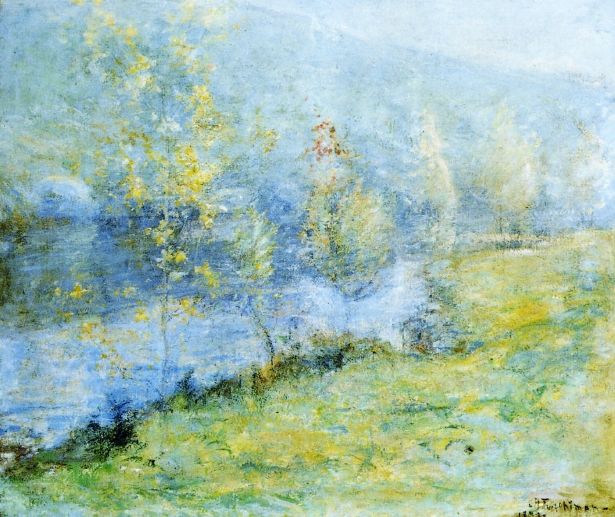

{May Morn, 1899, John Henry Twachtman, National Museum of American Art}

What always draws me into a painting are the colours.  It always fascinates me to find that shadows aren't gray - they're actually lavender, violet, deep turquoise, sea green, and cerulean blue; And highlights aren't just white - they're soft creams, tinted grays, feathery blues, and pastel pinks.  Once you're able to see that whites aren't really white, and blacks aren't actually black, art really transforms, and you may even start to see the variation in color and light in your daily life.

The other thing that really gets me, is the atmosphere Twachtman is able to create.  You can almost feel the morning fog over the river in the picture above, and the wintery chill in the air below.
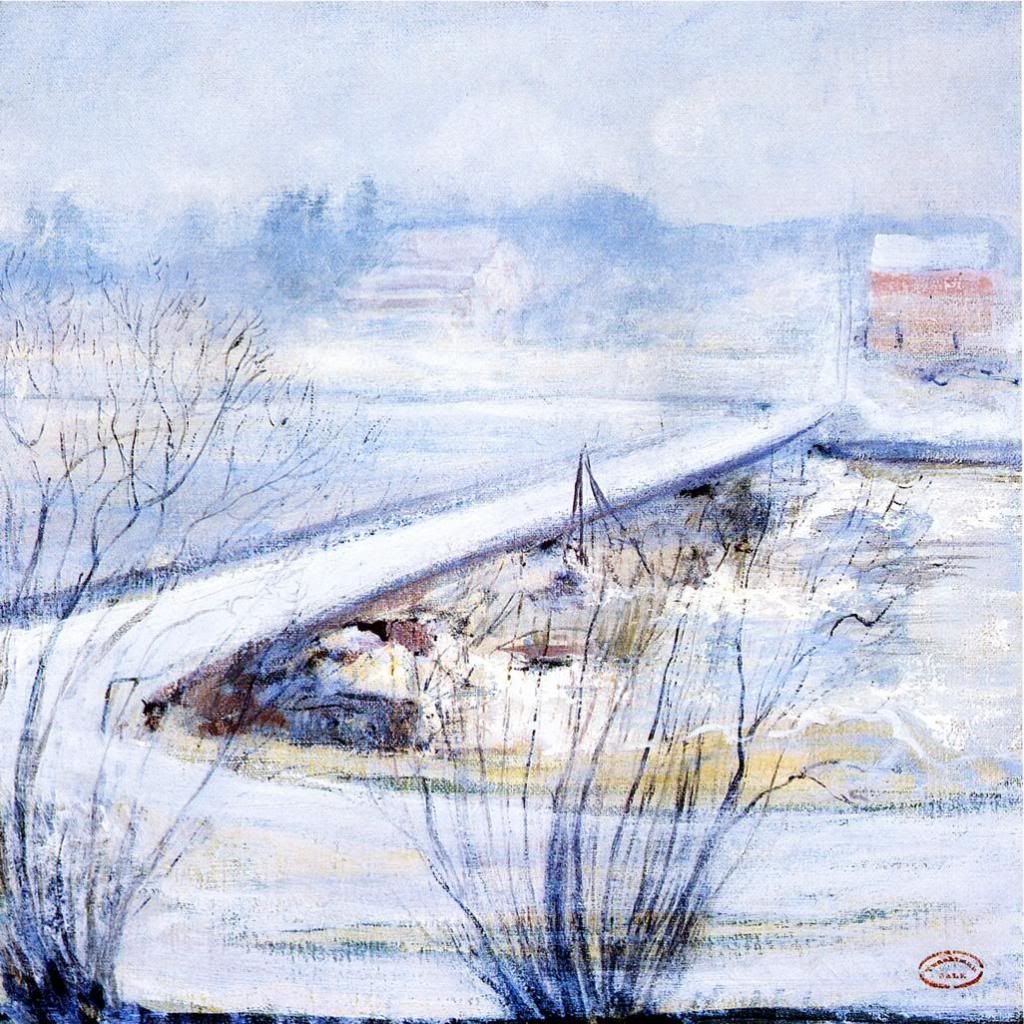
{Winter, 1898, John Henry Twachtman}

These other ones I simply chose because of their beautiful colours.  Can you see the rainbow colours in the snow of the last image??  It's so cool!! Or is it just me who thinks that's amazing? :)
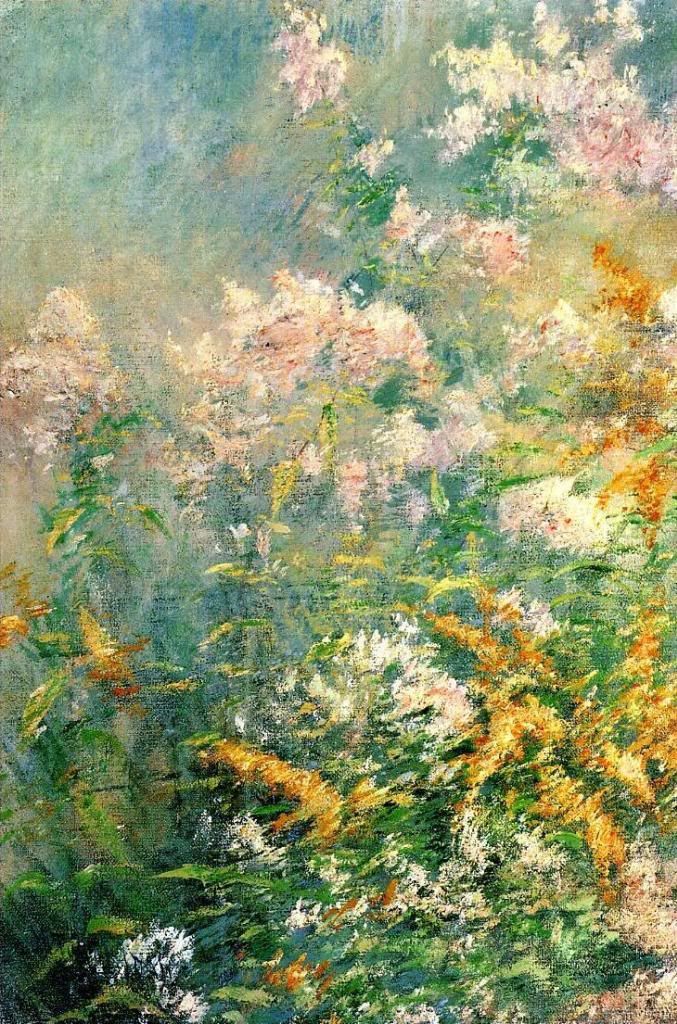

{Meadow Flowers (Golden Rod and Wild Aster), 1892, John Henry Twachtman, Brooklyn Museum, New York}
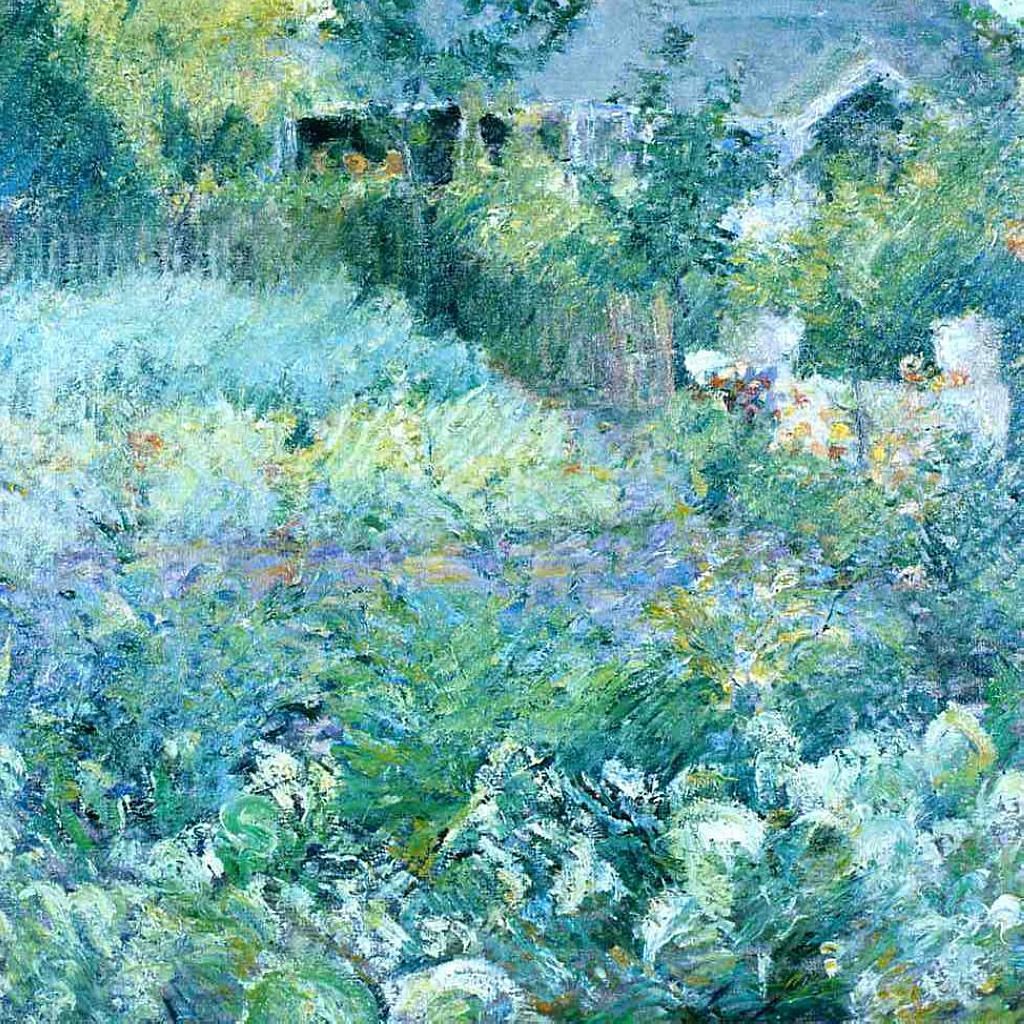

{The Cabbage Patch, 1890-93, John Henry Twachtman}
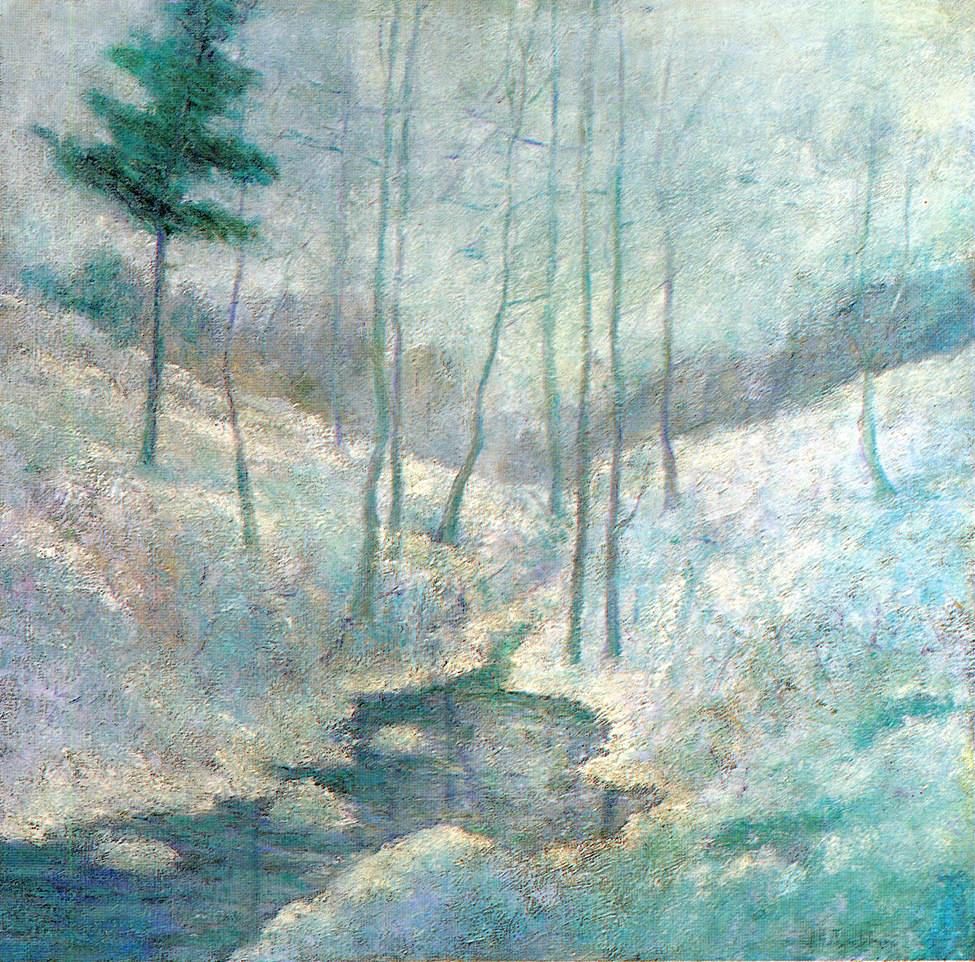

{Winter Landscape, John Henry Twachtman}

I would really love to make this into a series called "Art Lessons."  I have one more planned about Impressionists you've never heard of.  What do you think of this Art History series?  Would you read it?  Honest opinions please!


Instagram // Pinterest // Bloglovin // Society6

April 16, 2014

Springtime in Monet's Garden

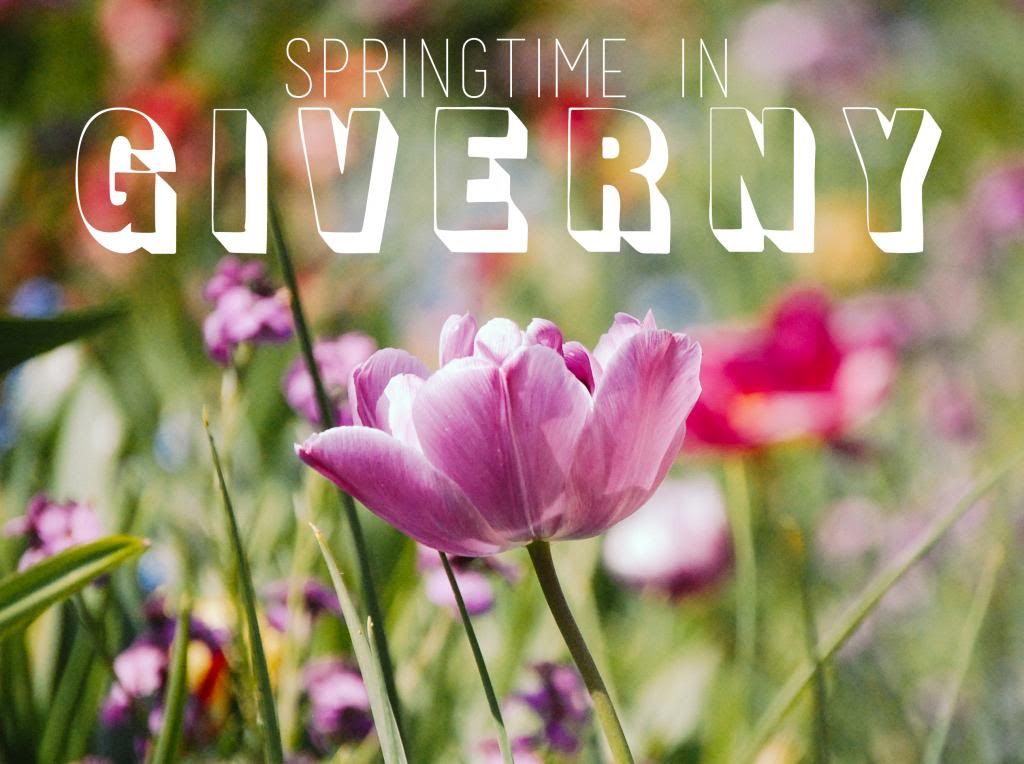
giverny title
Being a girl who took started French lessons in high school and studied Art in college, I've always had a soft spot in my heart for Impressionism, or any artwork during that time period actually. Degas' cropped Ballerina scenes, Van Gogh's vibrating and tortuous genre scenes, and Monet's expansive waterlily canvases. It's all so fascinating, the history behind these artistic revolutions; and what makes it even more fascinating, more so than seeing the canvases in a museum, is seeing the source of inspiration itself. I had the privilege of seeing Claude Monet's private gardens last Saturday, as well as his home.


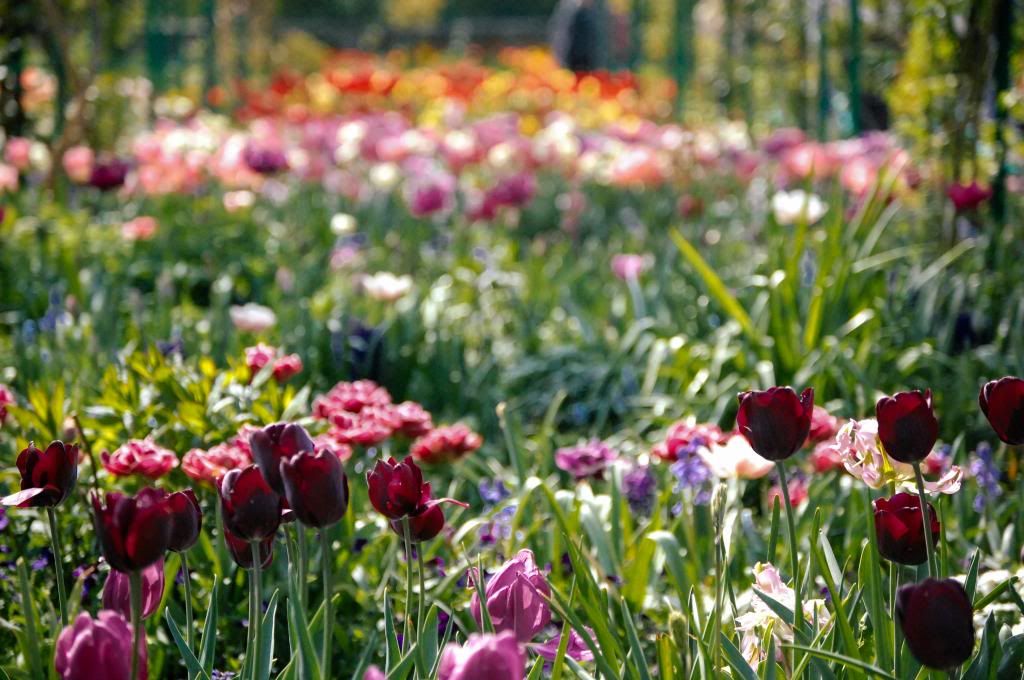
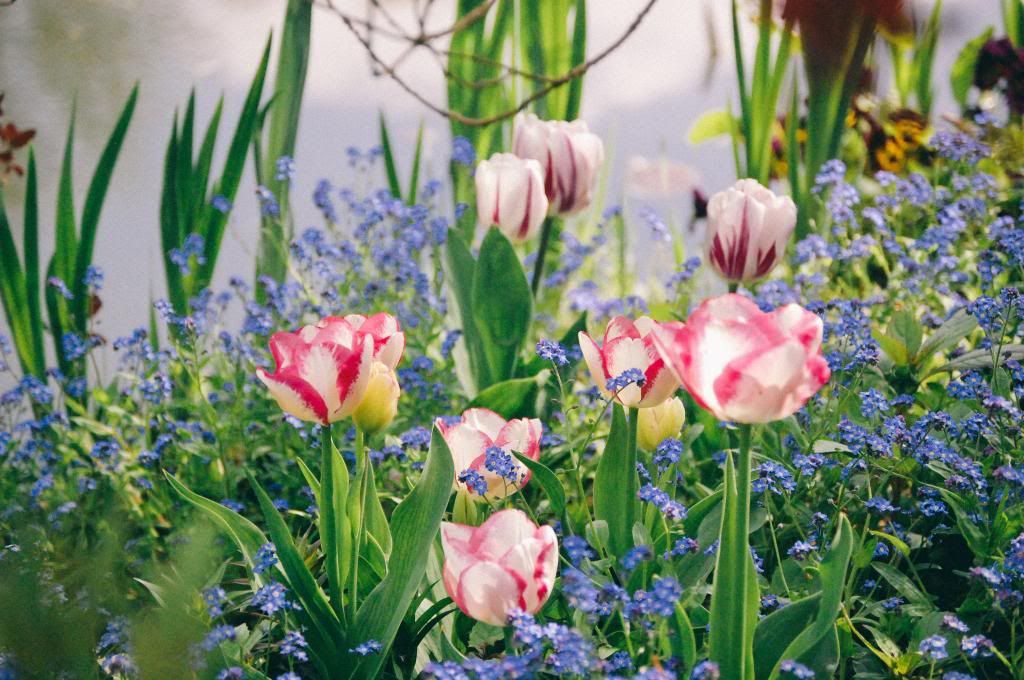
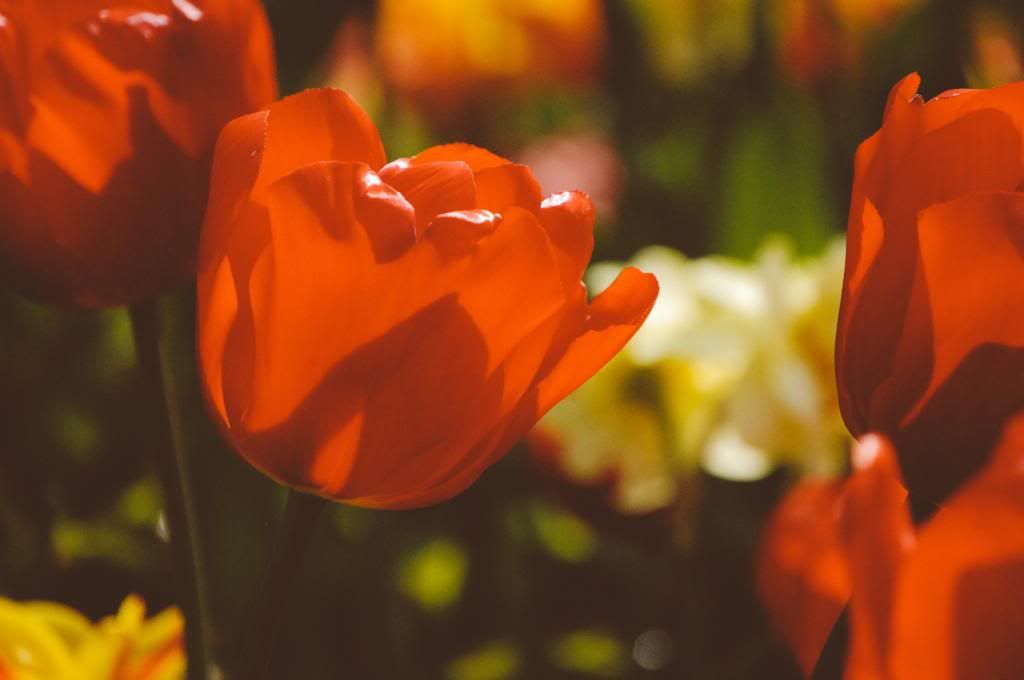
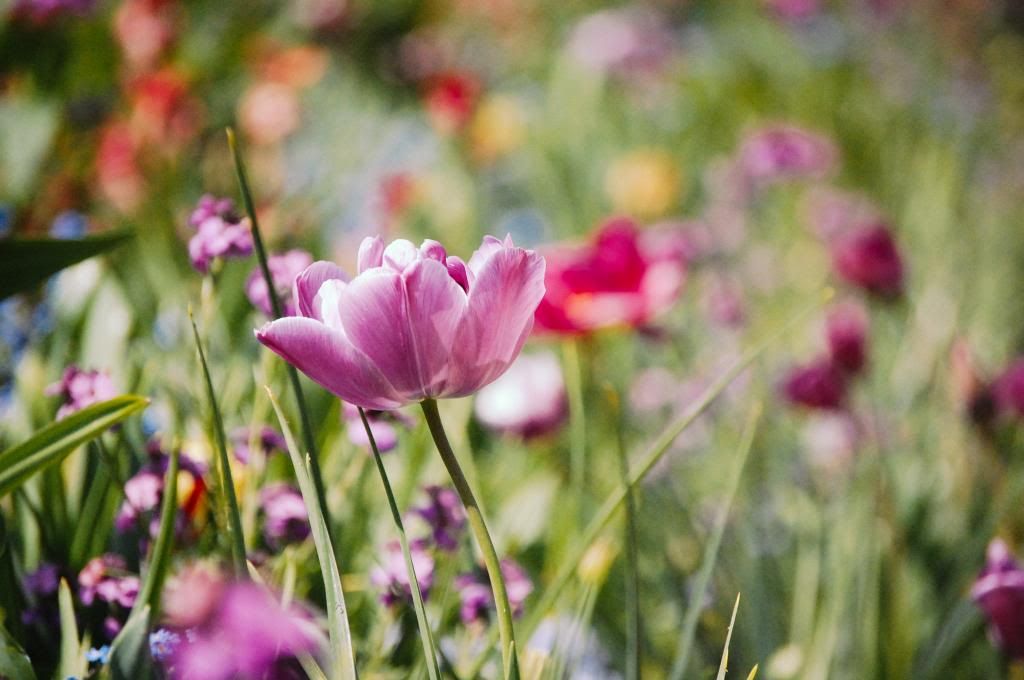
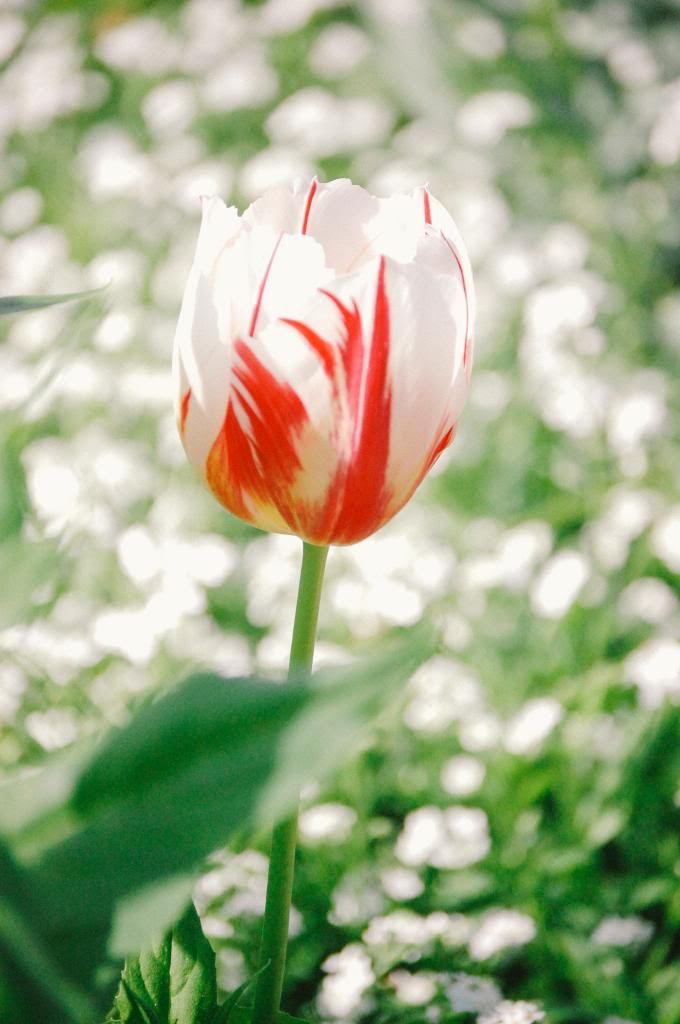
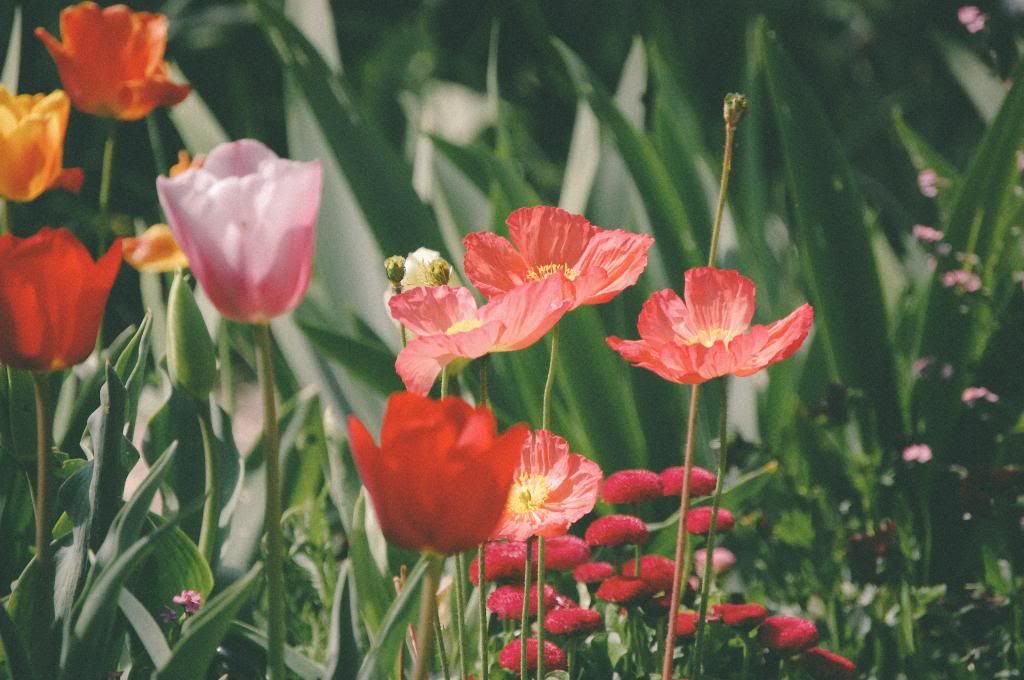
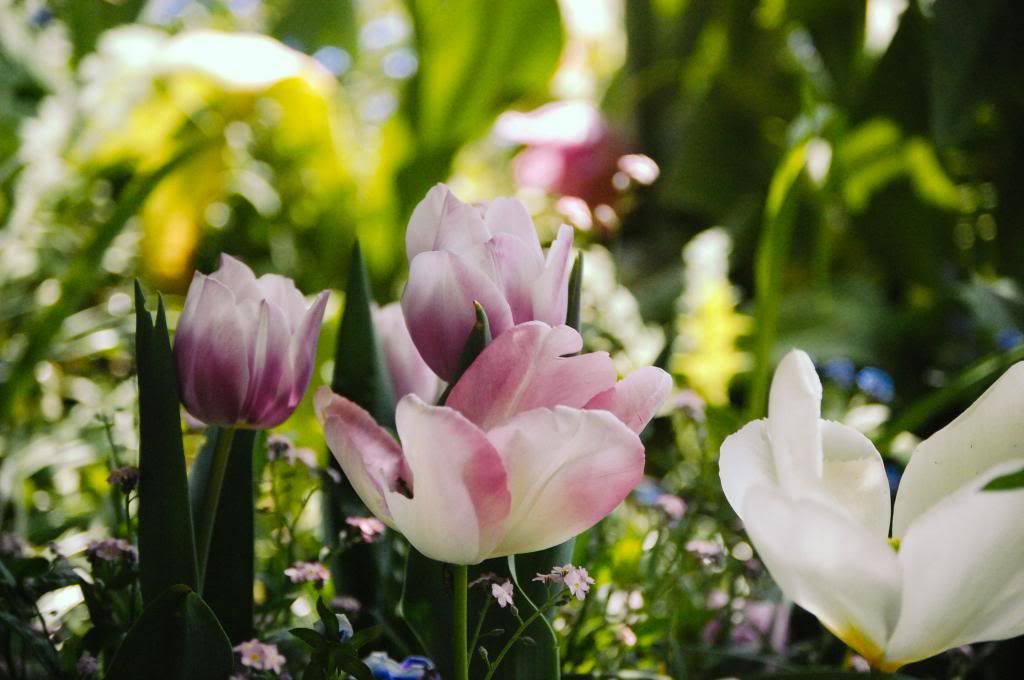
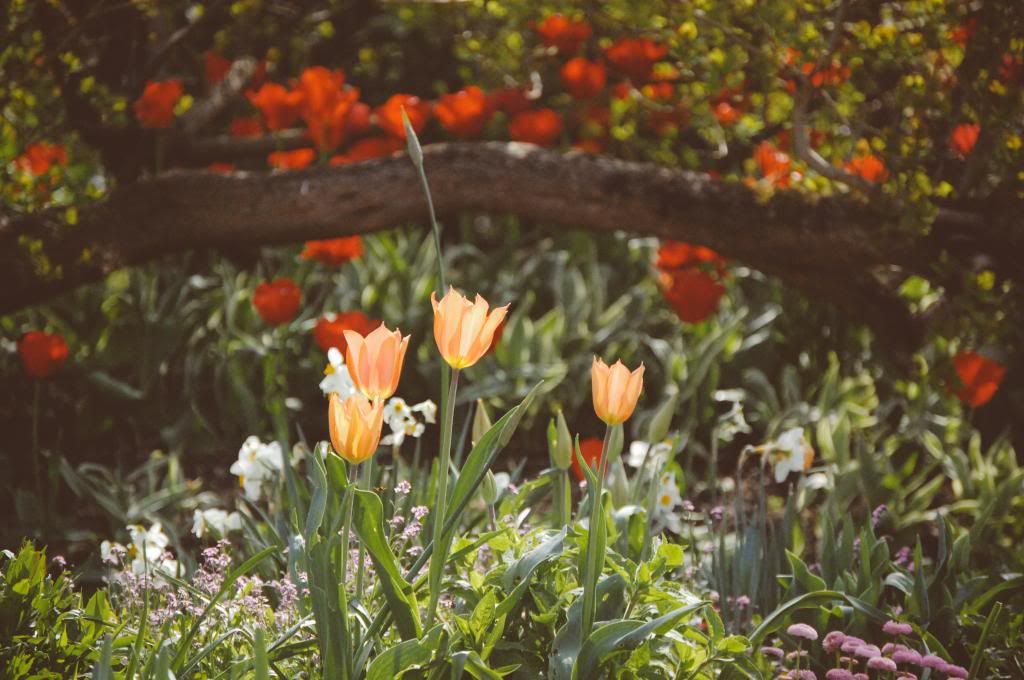
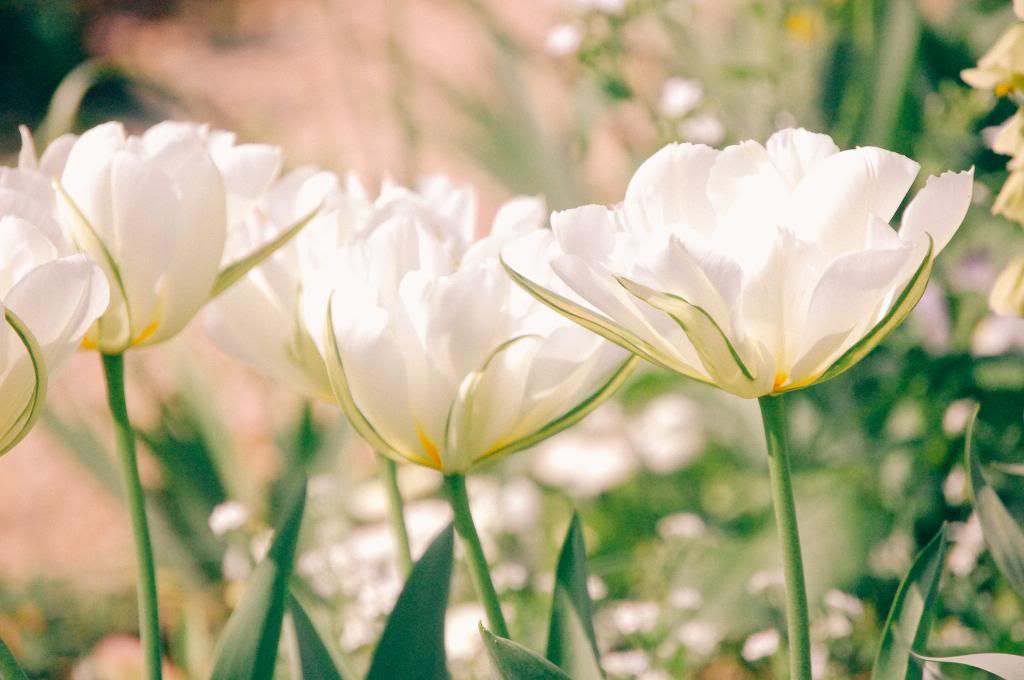
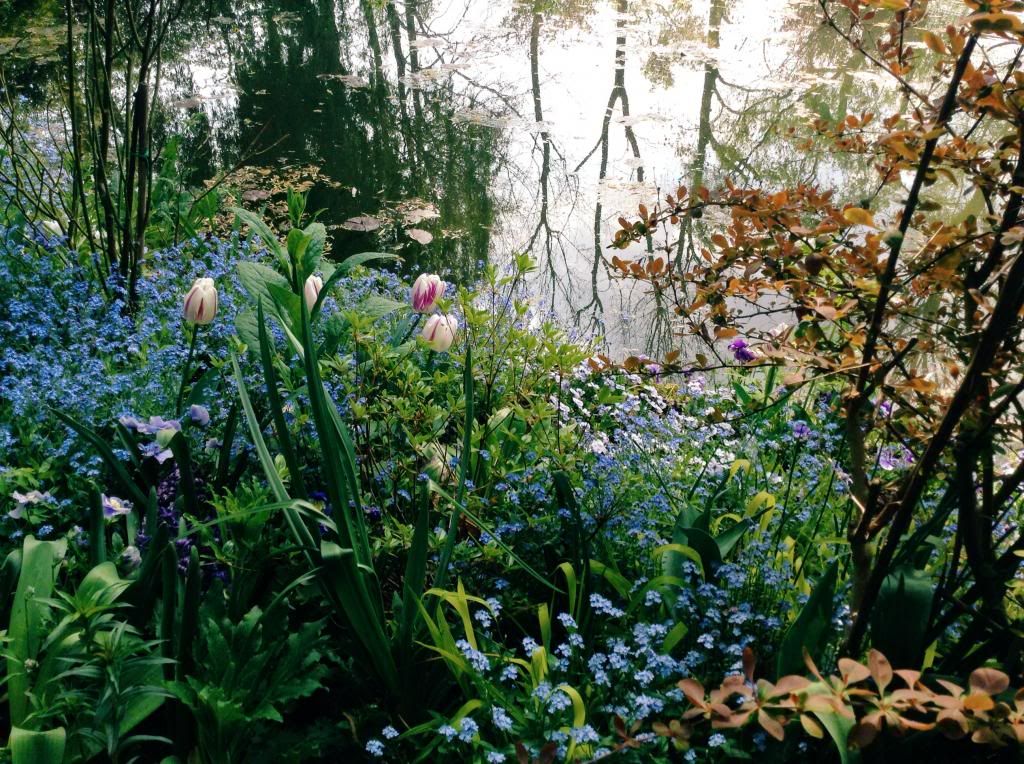
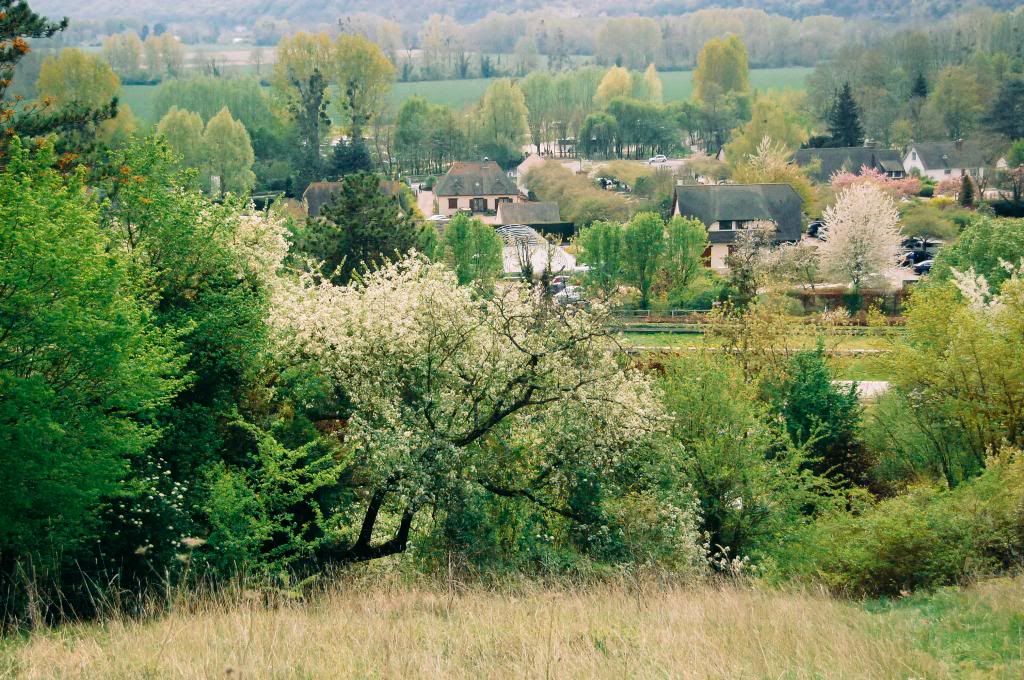
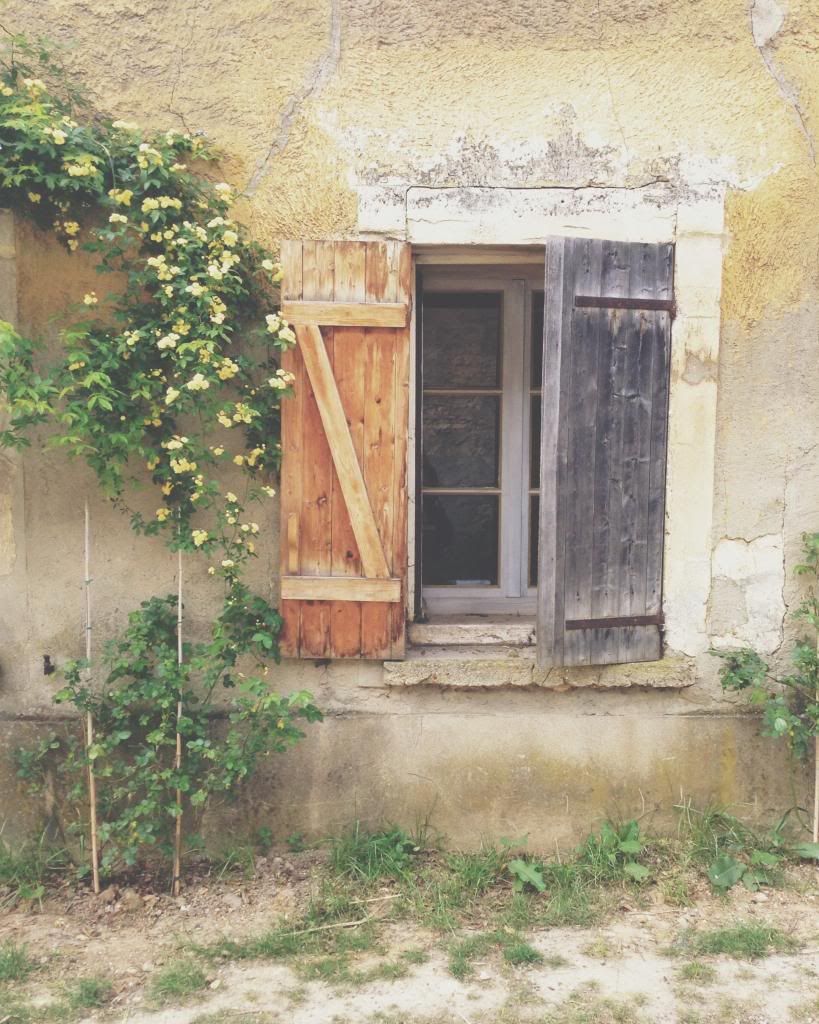
The village is called Giverny, and it's about 45 minutes to an hour outside of Paris. Gravelly roads, wooden shutters, and rolling green hills - it was something out of a fairy tale. I really didn't know what to expect from the garden, but I knew there would be a waterlily pond. Boy, were my expectations blown out of the water: Rows upon rows of brightly-colored tulips, poppies, daffodils, forget-me-nots, and pansies, just bopping their heads lightly in the breeze. The intense sunshine enhanced their colour to a fluorescent hue; I had to squint so much my eyes started watering a little bit! Even my camera had a difficult time capturing the brightness of the scene.
Rows of Tulips


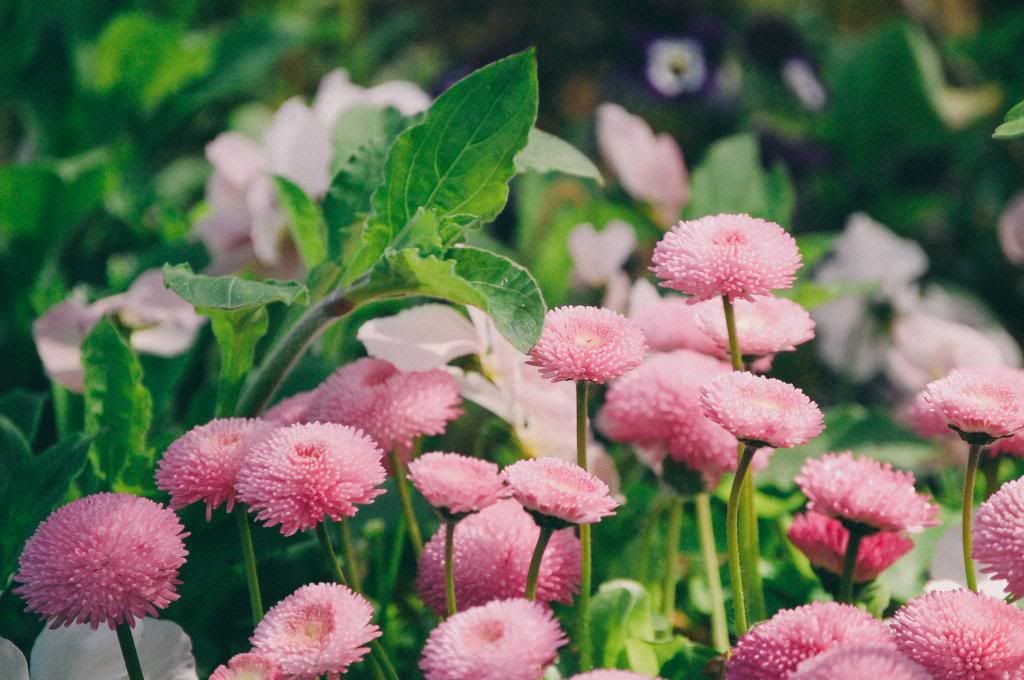
I've truly never seen anything like it. I had such a fun time zooming in on these flowers, exploring the floral forest with the lens. It's been a long time since I've enjoyed photographing something as much as this. I tried to narrow it down so this post wouldn't be super long, but it was hard!
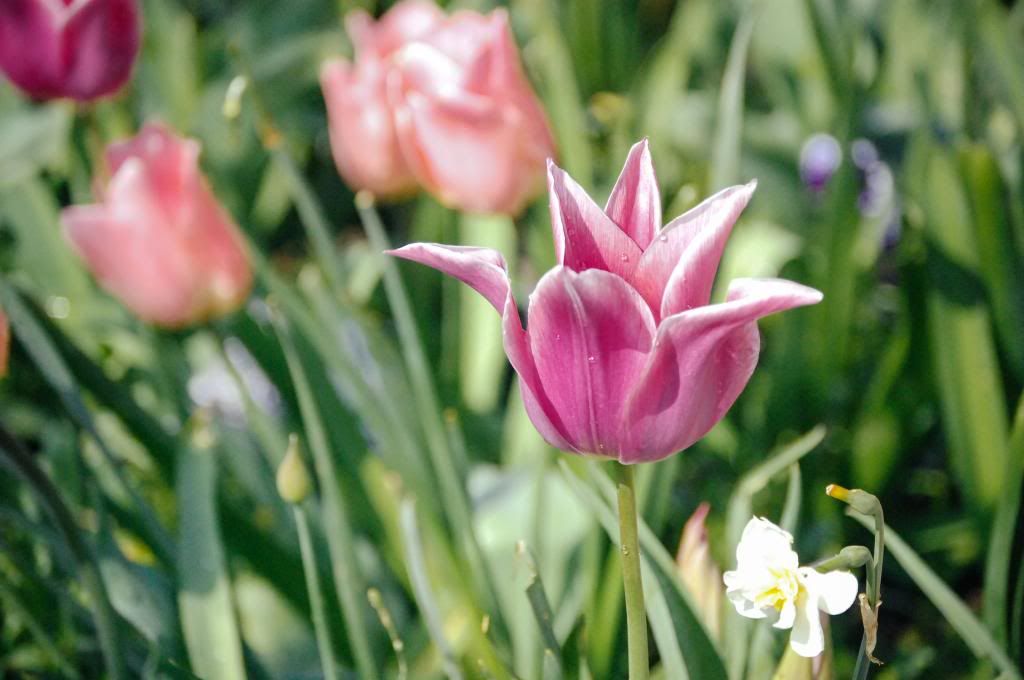
Pointed Petals

Springtime at Giverny

Transparent Petals

Midi à Giverny

Pink Buttons

Springtime at Giverny

Springtime at Giverny

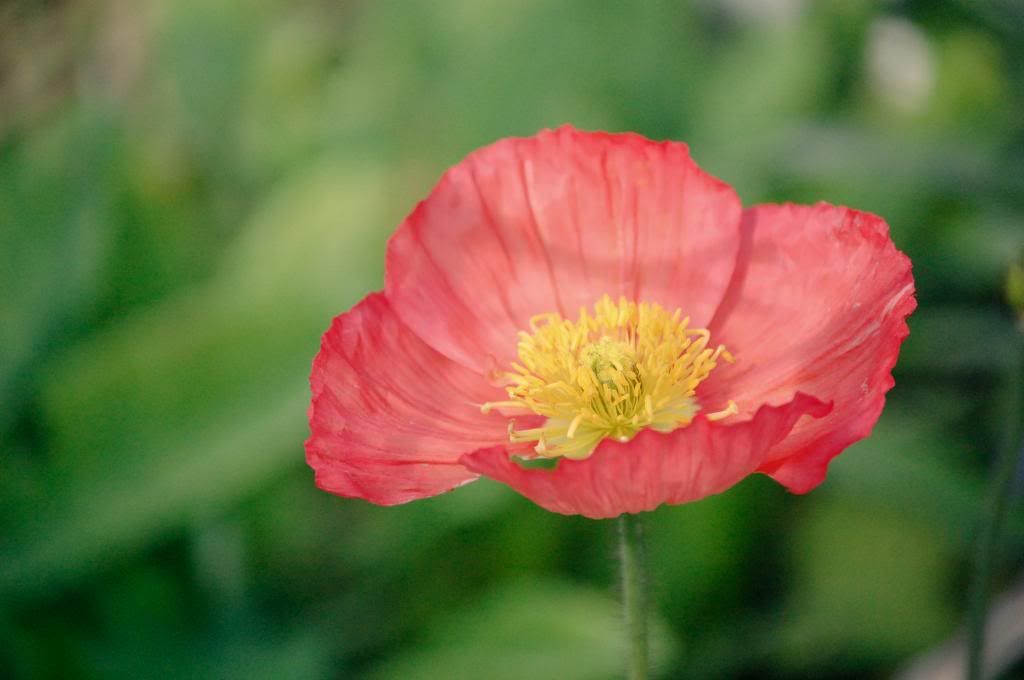
Pink Poppy

Springtime at Giverny

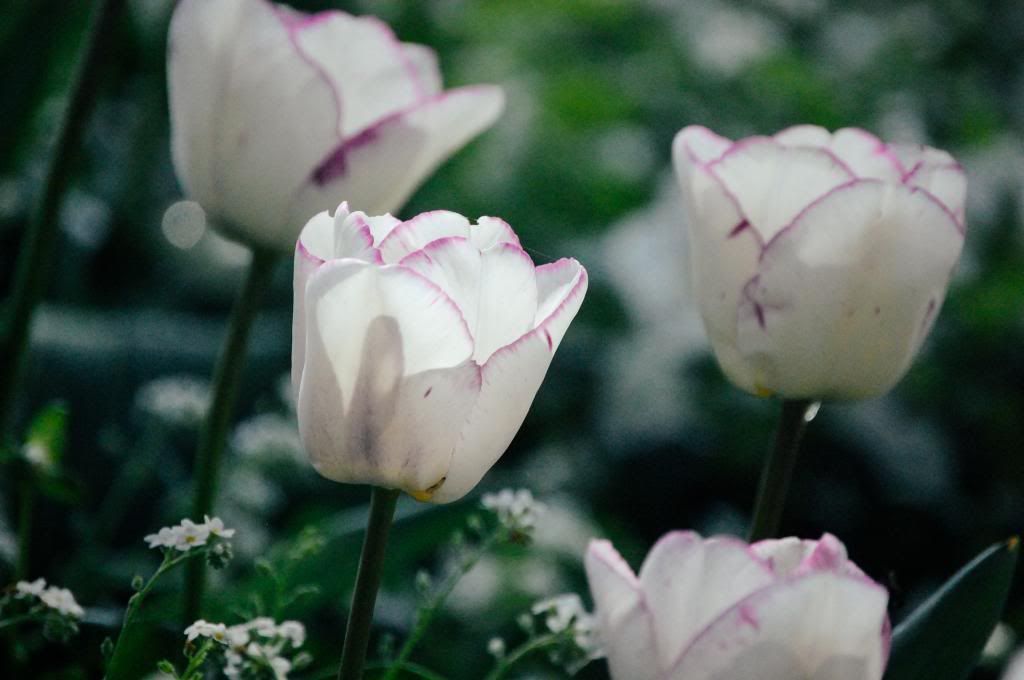
Purple edges

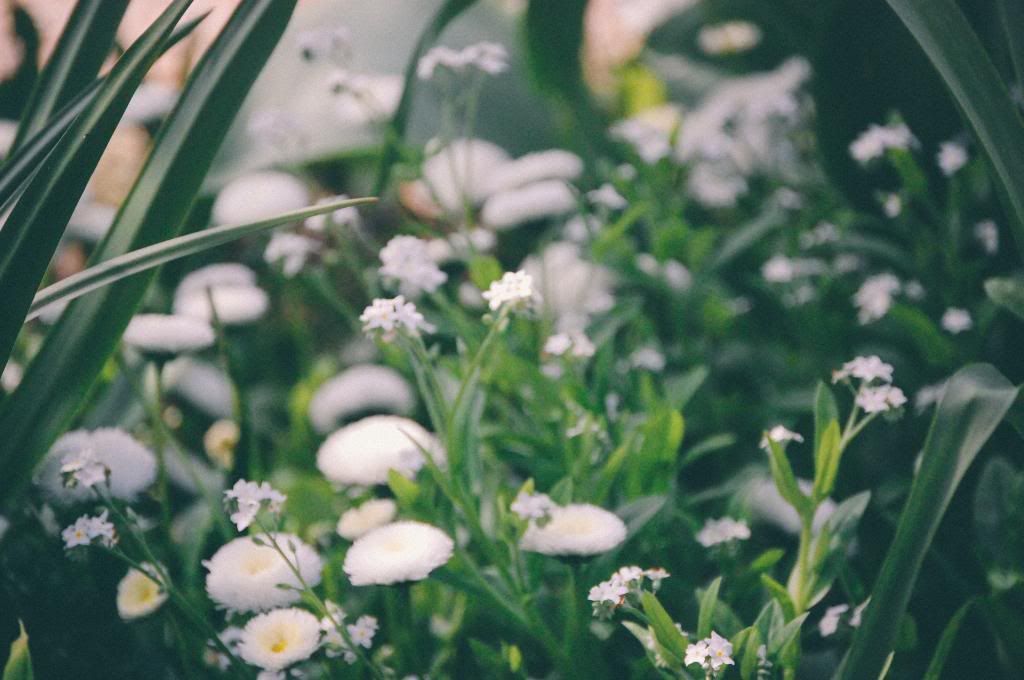
Forest of Flowers

Springtime at Giverny

Springtime at Giverny

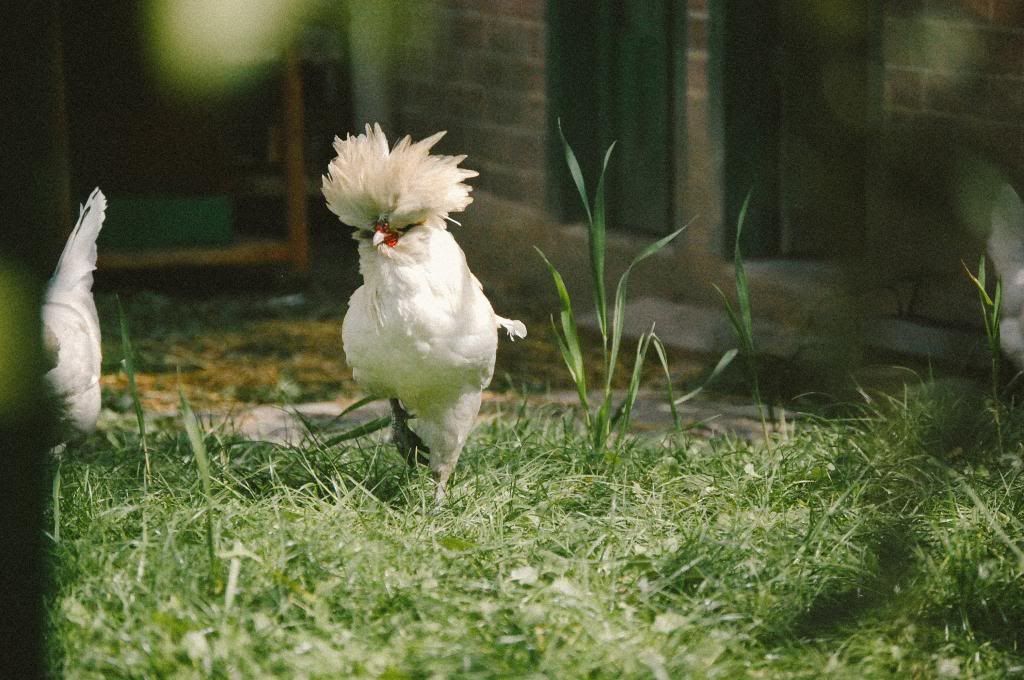
The chickens here had hilarious hairstyles!!
Crazy Chicken


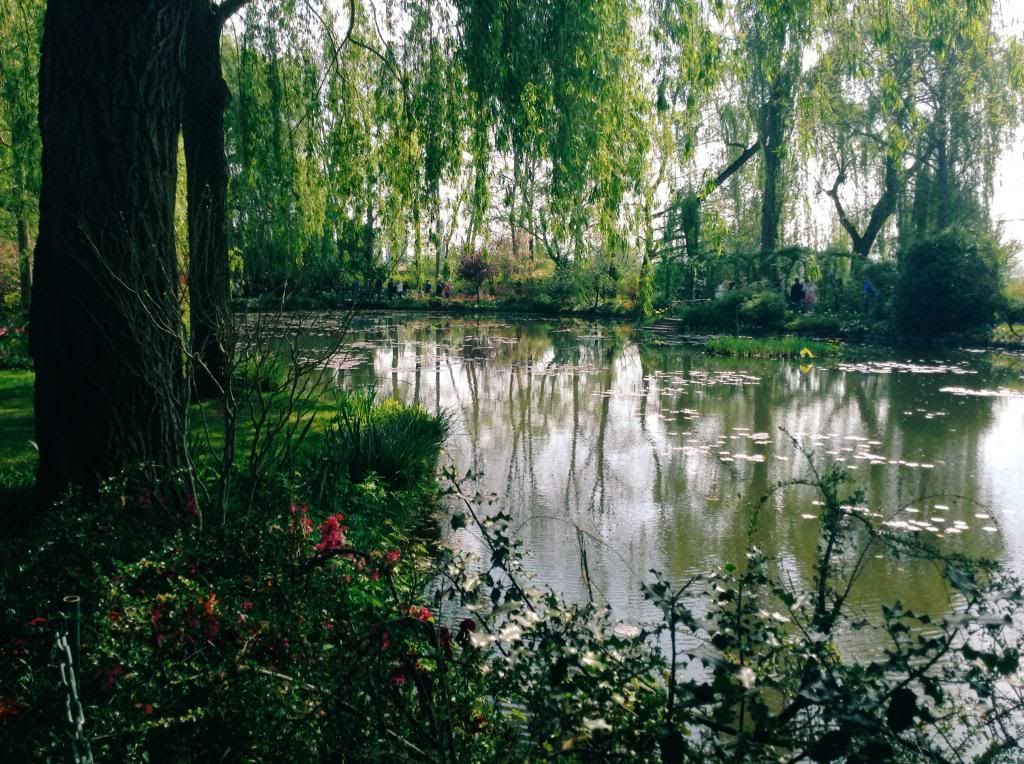
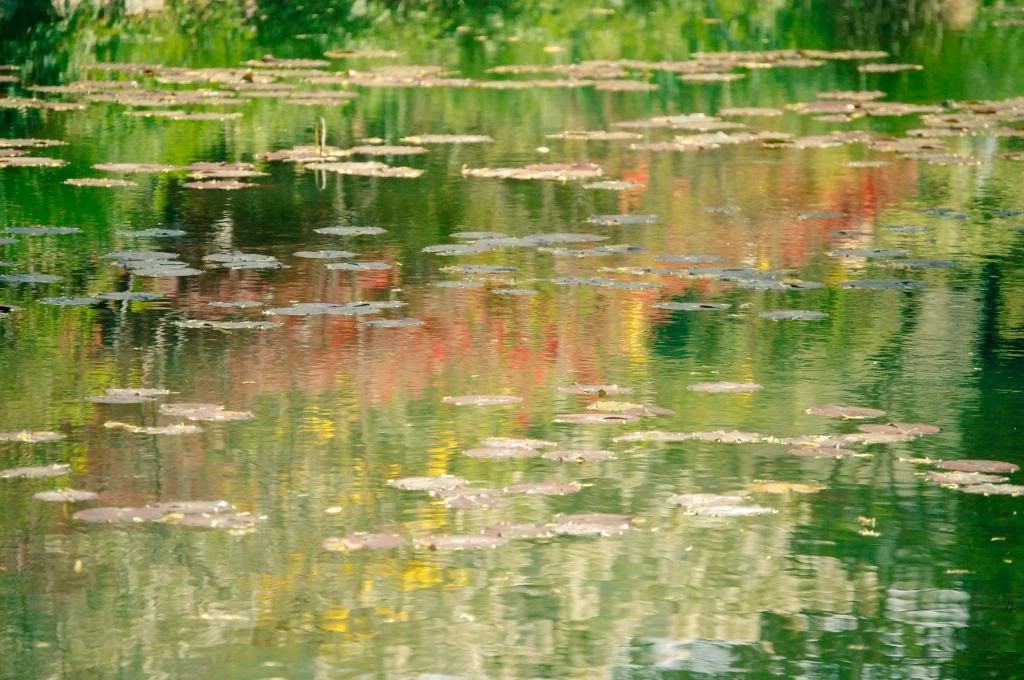
The lily pond was just as amazing, although I imagine it's even better during summertime, when the waterlilies bloom. I could easily see how Monet was inspired to paint his famous waterlily paintings here. The still water reflected not only the light, filtered through weeping willow branches, but also the flowers and plants placed on the banks, variations in green with random bits of red. The colours and abstractions that resulted on the water's surface were amazing.
Monet's Pond

Monet's Lilies


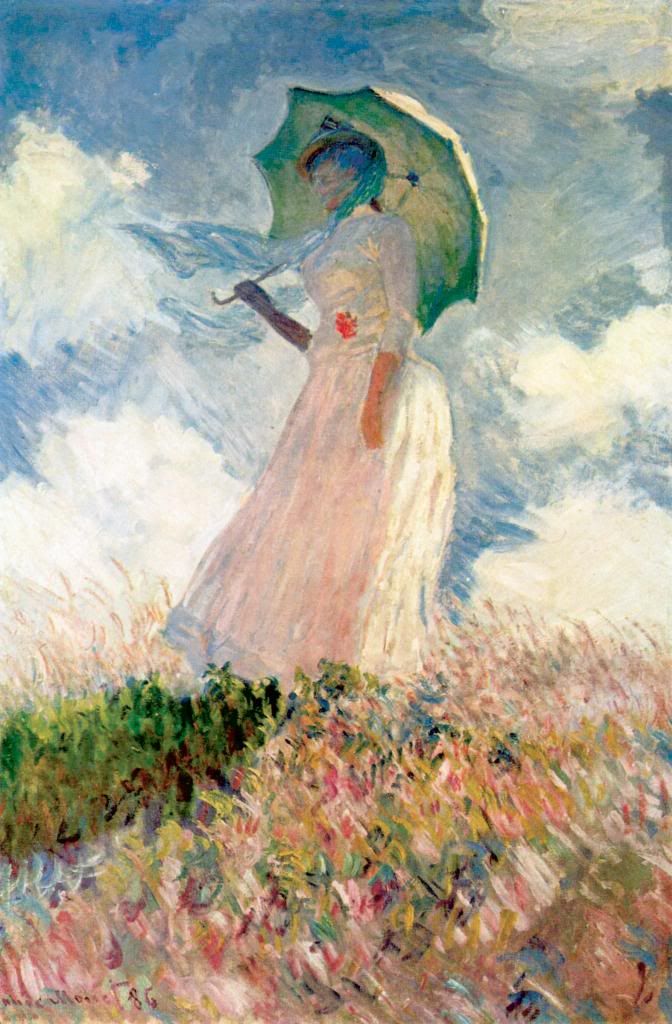
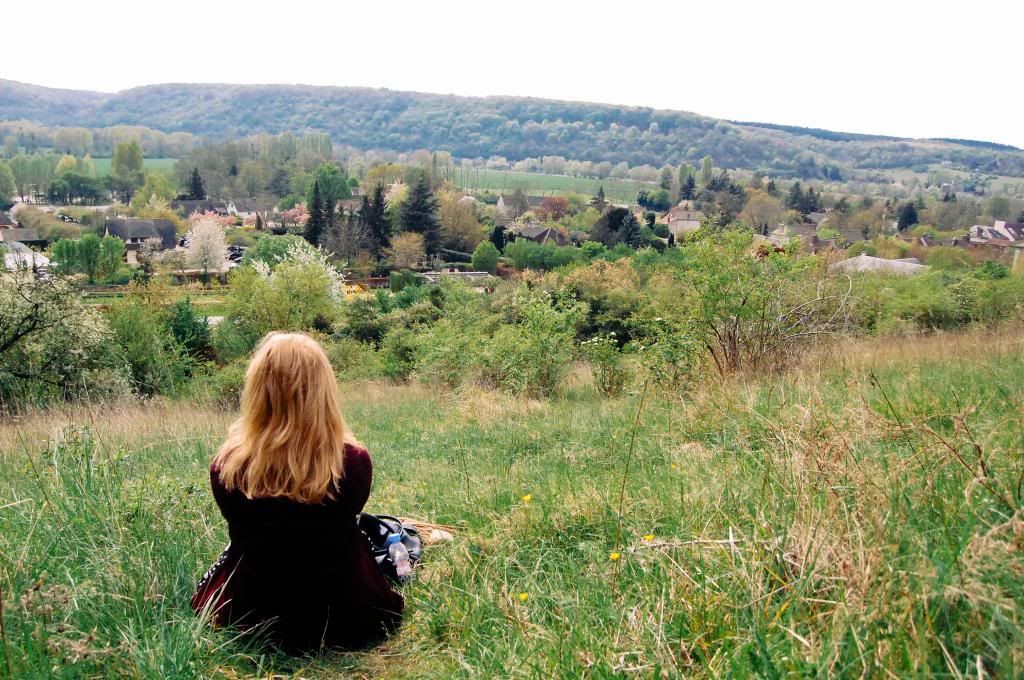
After idling away a decent span of time among the flowers, we went on an exploratory walk in the surrounding village. We spotted some people sitting high upon a hilltop, wondering how on earth they had hiked up that high. Well - with a bit of poking around, we were able to find a grassy walking trail, put on our explorer caps, and hiked up. Even though this part wasn't necessarily the most beautiful, It felt very special to me. One of my favourite paintings by Monet is the one of a woman, standing on a grassy hill, the breeze blowing her skirt. Although I was not carrying a parasol or wearing a fantastic full skirt, I truly felt like the scene I found myself in had the same feeling as a Monet painting. And how could I complain about this view? If I had a large blanket, this would have been a fantastic time for a picnic.
Claude Monet, Study of a Figure Outdoors: Woman with a Parasol, facing left, 1886
Monet's Hillside
Giverny 1


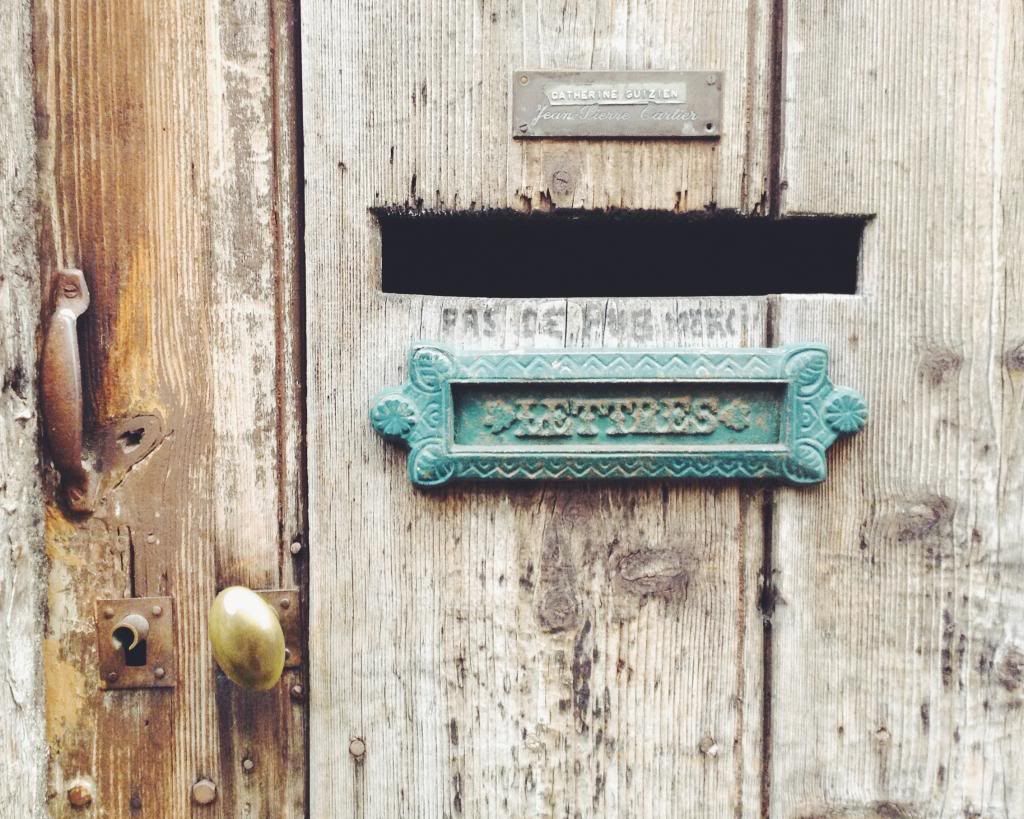
Once we reluctantly left Giverny and arrived back at the Vernon train station, we discoverd that the next train back into Paris would arrive in TWO hours! So we walked slowly around the town, admiring the half-timbered buildings that seemed so much older than the tall concrete buildings of Paris. Here are a couple snaps from our train-waiting period:
IMG_1907
Lettres - Vernon
Vernon


I think what struck me most about this trip was the feeling of adventure it gave me. It's been quite a while since I've felt that spark of passion, freedom, and novelty. Even Paris, although amazing, can become predictable over time; Giverny was something I've never, ever done before, and I loved that feeling. I can't wait to get that travel-high again some time soon! Tell me about a time that you felt that spark of adventure in the comments below!

Instagram // Pinterest // Bloglovin // Society6

February 23, 2014

Artist Feature: Johanna Tagada / BonjourJohanna

As I was going through a blog-redesign binge in the wee hours of the morning last week, I realised that one of my sidebar categories reads: "Art", and I haven't featured an artist in over 3 months! :o So without further ado, let's get into some art!
Johanna Tagada
Johanna Tagada is an abstract painter who also works with many different media, including painting, collage, photography, textile design, and ceramics. She's originally from France, but currently lives in Germany. Her heritage is multicultural, and so are her interests; She speaks many different languages, travels often, and is inspired by cultural heritage, especially folk art. Her irregular patterns and shapes have something of a tribal or naive feeling to them, yet the colours and sparse compositions make it feel quite modern. The pattern below, with its visible painted texture, resembles cracked mud, a motif that brings to mind the ancient past, hunter-gatherers, wild, harsh environments - What makes this image modern is the two-dimensionality and the pastel colour. The best way I can describe her colour palette is: Sun-bleached pastels.
Johanna Tagada
Johanna Tagada
Johanna Tagada

I really enjoy the textile pattern below, as it looks a bit like a quilt - an art form that has a long history and folk-craft connotations.
Johanna Tagada
Johanna Tagada
In her shop, you can find many different kinds of objects, prints, pins, zines, and even hand painted t-shirts. This one's pretty adorable, and even comes with some tea leaves and a matching card! I'm calling it "The Tea Tee" ... heh heh heh.

Speaking of her store, I love the paint-dollop background she has going on! I've been looking around for web and blog-design inspiration recently, and her store has a fresh feeling to it.


If you want to learn more about Johanna, I have links to a couple interviews she's done below, as well as all her other sites. She seems like a wonderful person: unpretentious, open, creative, and optimistic, just like her art. The best way you can support her is to like/share her work, or even better, buy something from her shop!


You can find her here:
Shop - Bonjour Supermarket
Blog - Bonjour Johanna
Portfolio - Johanna Tagada
Instagram: bonjourjohannatagada
Facebook
Interview about her life
Interview about her aesthetics


My links:
Instagram // Pinterest // Bloglovin // Society6

February 11, 2014

Musée Jacquemart-André

Last Wednesday night, I was feeling pretty crummy about everything, asking myself existential questions like, "why am I here, what's the point of going into Paris, I'm running out of money, what is life, who am I???" So I decided, instead of wallowing in these thoughts, I should defy them and go see something I've never seen before in Paris.

I chose Musée Jacquemart-André, a relatively small museum of decorative arts in the fancy 8th arrondissement. One downside to no longer being a student, is that I no longer receive free admission to certain museums around Paris. I naively attempted to use my old Parisian student ID, but embarrassingly, the ticket woman checked the date on the back and I ended up paying the full price. oops! :p


This museum has an amazing staircase! Still not as good as the staircase at the Gustave Moreau Museum though!

I really love the colors and textures of this smoking room, the rugs, the velvety sofa, and the carved wood:


After the museum, my friend and I got "the best falafel in Paris" on Rue des Rosiers, and then some yummy ice cream at Berthillon because I am obsessed. I've been to Berthillon far, far too many times. In only managed to take this quick pic of the felafel. It was indeed delicious.


Instagram // Pinterest // Bloglovin // Society6

December 19, 2013

...and it all comes down to this.


After years of procrastinating on research papers, sitting through examinations, falling asleep in class (just kidding, I'm a great student), walking up and down campus, and lugging heavy library books, I'm finally done with my Bachelor's degree... and it feels pretty anticlimactic.

Don't get me wrong, I'm not disappointed. I wasn't expecting fireworks and a round of applause, it just struck me as funny that the entire experience culminated in me walking alone to the concrete parking structure, getting in my car, and driving away.

I had one of those moments of clarity while I was cruising in the fast lane on the 405. When you feel really aware of the fact that you're alive, and like you're part of the human vein, flowing recklessly through time. You pretend to have control, but time will keep flowing, urging you forward.

Perhaps the catalyst of this existential moment was spurred on by the content of the final, final exam I had just taken. Nearly all of contemporary art is about identity, time, our histories, reality, and meaning - how all of these things have multiplicities, layers, implications, and nuances of meaning. Yes, even the idea of "meaning" can have different definitions.

These two clocks are a work by Felix Gonzalez-Torres, and represent the passage of time, the love between two people, and the tragedy of AIDS in the 1980s. The clocks tick away, slightly out of sync. They convey the anxiety of the passage of time, knowing that the one you love will die from a confusing and cruel disease. This work is a double portrait of the artist and his partner, who were both taken by AIDs only 5 years apart.

{Felix Gonzalez-Torres, Untitled (Perfect Lovers), 1991}

This is one of my favorite works of art, because something so simple can convey SO much information and emotion.


I didn't intend for this entry to end on such a low note! I promise I'm happy to be done with school! haha.

Here's the song I was listening to on the road today:


Instagram // Pinterest // Bloglovin // Society6
Related Posts Plugin for WordPress, Blogger...